

A urine bottle is not always the same as a laboratory urine specimen container.
A toileting urinal may help a patient, older adult or person with limited mobility collect urine comfortably, but it should not automatically be used for diagnostic testing.
The correct container depends on the urine test requested.
A laboratory or healthcare provider may require a clean specimen cup, a sterile container, a tamper-evident collection container, or a larger dedicated bottle for a timed collection.
This distinction matters for hospitals, clinics, factories arranging workplace screening, and caregivers supporting sample collection.
Common tests that may require a urine sample container include routine urinalysis, urine culture, urine drug screening, urine albumin or protein testing, and 24-hour urine collection tests.
Before providing or using any urine bottle, confirm the test instructions, required container type, labelling process and sample handover procedure with the clinic, laboratory or authorised testing provider.
For workplaces, clinics, hospitals and caregivers, the term “urine bottle” can mean different things.
A bedside urinal bottle may help a person collect urine comfortably, especially when mobility is limited.
A laboratory urine specimen container, however, is intended for a specific testing process.
These should not be treated as interchangeable.
The correct container may depend on the test requested, the required sample type, whether contamination control is needed, and the laboratory’s instructions.
In some cases, a person may be asked to provide a clean-catch sample.
In other cases, the provider may supply a dedicated specimen cup, collection kit or larger timed-collection container.
A routine urinalysis is a broad urine test that may check the appearance and chemical or microscopic components of a urine sample.
It may be used as part of a health assessment or when a healthcare provider needs more information about certain symptoms or conditions.
For this type of test, the provider may request a clean-catch urine sample.
The purpose is to reduce the chance that germs or other material from outside the urinary tract enters the sample and affects the testing process.
For organisations, the practical point is simple: do not assume that any available bottle is appropriate.
The person collecting the sample should receive the correct container and instructions from the clinic, laboratory or healthcare provider.

A urine culture is different from a general urinalysis.
It is used to check whether germs may be present in a urine sample and whether further testing is needed.
Because contamination can affect the usefulness of a culture sample, the collection method may be more specific.
A healthcare provider may give the patient a special collection kit or instruct them to use a particular specimen container. In some clinical situations, a trained healthcare professional may collect the sample through an approved method.
For caregivers and clinic teams, the key lesson is that a urine culture should not be treated as a casual sample collection task.
The required container, handling process and timing should come directly from the healthcare provider or laboratory.
Urine may also be used for drug screening.
In workplace settings, this may be relevant where an organisation has an authorised screening process, safety procedure or occupational health requirement.
A urine drug screening process may involve more than a container alone.
Depending on the programme, it may also involve identity checks, privacy controls, test instructions, documented handling and an authorised provider.
These requirements should be established by the organisation’s approved testing procedure rather than decided informally by a manager, supervisor or employee.
Organisations that need background information about this area can review AIDEL’s drug and alcohol test kit resources and its guide to urine drug screen test kits.
These resources should support planning discussions, not replace an authorised testing protocol or professional advice.
Some urine tests examine substances such as albumin, protein or creatinine.
These tests may form part of a healthcare provider’s assessment of kidney-related concerns or ongoing monitoring.
The collection approach can vary.
A provider may request a single urine sample, while another situation may require a timed collection.
The patient should not interpret the result independently, because the meaning of a result depends on clinical context and professional assessment.
For hospitals, clinics and caregivers, the main operational requirement is to ensure that the patient receives the correct container and follows the exact collection instructions provided for that test.
A standard-looking urine bottle may not be suitable simply because it can hold a sample.
A 24-hour urine collection test is different from a one-time urine sample.
It usually requires a person to collect all urine produced during a defined 24-hour period in a dedicated collection container.
Because the collection covers a specific timeframe, missing a sample or using an unsuitable container can affect the usefulness of the collection.
The laboratory or healthcare provider should provide the timing instructions, collection container and any storage or handover requirements.
For caregivers supporting an older adult, patient or person with limited mobility, clear planning matters.
The person may need help understanding the collection window, using a temporary urinal safely where appropriate, and transferring the sample only according to the provider’s instructions.
Before providing any urine bottle or sample container, ask these practical questions:
For workplace drug-testing situations, readers may also find AIDEL’s information on urine for a drug test useful as a related reference. Any actual testing process should still be based on the organisation’s approved policy and the instructions of the authorised provider.
A urine container should not be selected only because it is available, looks clean or is commonly used in another setting.
Ask the clinic, hospital, laboratory or authorised testing provider when:
The safest approach is to use the exact container and collection process specified for the test.
This helps hospitals, clinics, factories and caregivers avoid preventable collection errors while keeping patient care and workplace processes more organised.
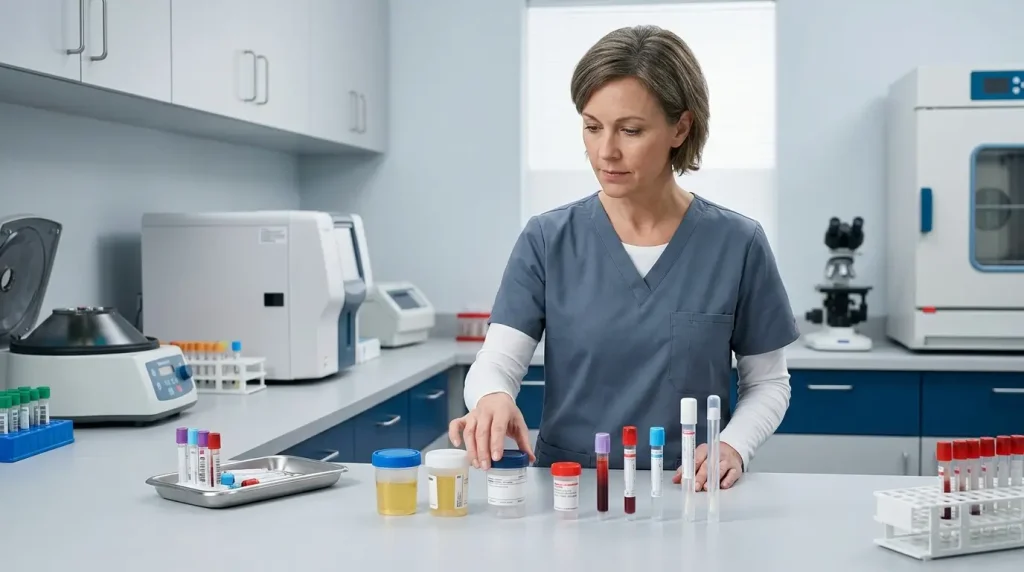
The five common urine tests discussed in this article may all use a urine sample, but they do not necessarily use the same type of urine bottle or collection container.
Routine urinalysis, urine culture, urine drug screening, kidney-related urine testing and 24-hour collection tests can each involve different sample-handling requirements.
For hospitals, clinics, factories and caregivers, the practical rule is straightforward: confirm the test type first, then follow the healthcare provider, laboratory or authorised testing provider’s instructions on the required container, sample collection process, labelling, storage and handover.
A urine bottle intended for toileting should not automatically be treated as a diagnostic specimen container.
Using the correct process helps reduce avoidable collection errors and supports more organised patient-care or workplace-screening procedures.
For organisations operating an authorised workplace drug-screening programme, explore AIDEL’s urine drug and alcohol test kit supplies after confirming the required testing method, collection process and responsible provider for your workplace.
No. A clean household bottle, bedside urinal or other available container should not be assumed suitable for laboratory testing.
The clinic, hospital, laboratory or authorised testing provider should specify the correct container and collection instructions for the required test.
No. The required container depends on the test and collection method.
Some tests may use a standard specimen container, while others may require a specific collection kit, a sterile container, a tamper-evident process or a larger dedicated bottle for timed collection.
Not necessarily. A workplace drug-screening process may involve additional requirements such as identity confirmation, privacy controls, sample handling and documentation.
Organisations should follow the approved testing procedure and the instructions of the authorised provider rather than assuming one container is suitable for every test.
A caregiver may help a person who has mobility, age-related or other practical difficulties, but the collection process should still follow the instructions given by the healthcare provider or laboratory.
Ask for guidance when the person cannot collect the sample independently or when the required collection method is unclear.
