
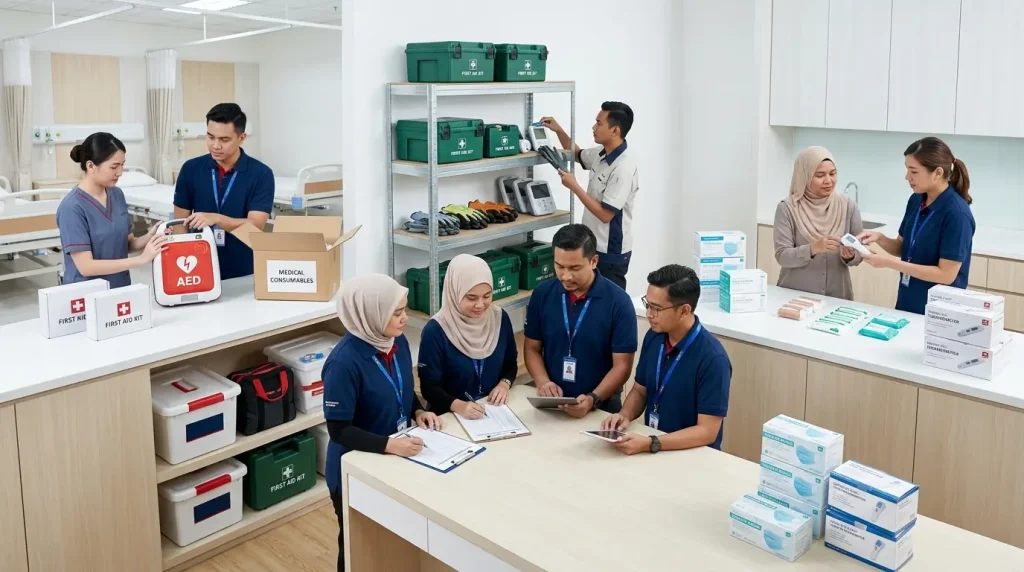
Choosing medical supplies for a workplace or care setting is not simply about ordering the largest catalogue.
A factory with shift workers, a school sickbay, a clinic consultation room and a caregiver supporting someone at home can face very different risks, users and response needs.
The real challenge is deciding which equipment and supplies are suitable, how they should be stored and maintained, and whether the people responsible know what to do when an incident, illness or emergency occurs.
Medical device companies in Malaysia can help hospitals, clinics, factories and caregivers access suitable devices, essential consumables and practical support for their environment.
Their roles may differ: some focus on manufacturing or distribution, while others help buyers assess product suitability, coordinate supplies, support workplace first aid readiness, provide screening tools, supply sickbay equipment or assist with training needs.
This article explains seven practical ways medical device companies may support safer and better-prepared care and workplace environments.
It also explains why equipment alone is not a complete solution without responsible selection, clear procedures, suitable storage and appropriately trained people.
When organisations hear the term “medical device company,” they may imagine a manufacturer producing hospital machines or specialised clinical equipment. In practice, the wider medical-device ecosystem can involve manufacturers, importers, distributors, suppliers, technical service providers and training partners.
Each may support a different stage of readiness.
A hospital may need clinical devices and consumables that fit its care processes.
A clinic may require practical supplies for consultation rooms and point-of-care activities.
A factory may need a better-organised first aid solution, trauma-response equipment, screening tools or AED-related supplies.
A school, institution or corporate office may need a sickbay setup that is suitable for staff, students, visitors and routine incidents.
The important question is not simply, “What product should we buy?” It is, “What does our environment need, who will use it, and what support is required for it to be used responsibly?”
A manufacturer may focus on designing or producing a specific medical device category.
A distributor or supplier may help organisations obtain products from multiple brands or categories.
A service provider may help with delivery coordination, equipment selection, replenishment planning, staff training or workplace-readiness support.
For procurement, safety and operations teams, this distinction matters.
A suitable supplier should understand the intended use of the product and the conditions in which it will be stored, accessed and used.
For example, a small corporate office may only require a practical first aid arrangement and clear emergency-response guidance.
A factory with machinery, shift workers and higher physical-risk activities may require a more detailed review of first aid supplies, trauma-response items, staff readiness and escalation procedures.
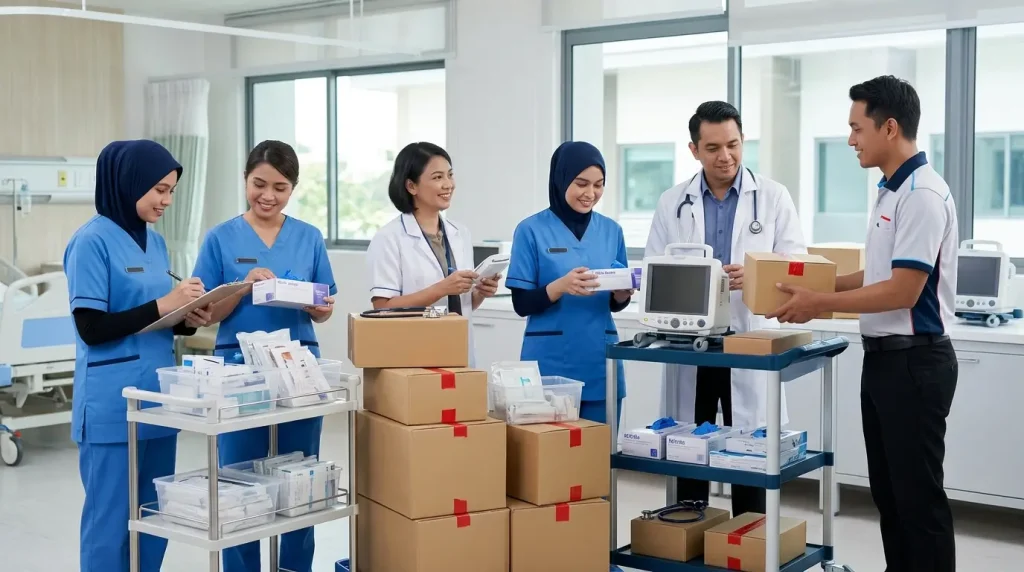
Hospitals and clinics depend on consistent access to devices, consumables and supporting supplies that suit their care environment.
These may range from basic wound-care items and examination supplies to monitoring devices, point-of-care tools and specialised clinical equipment.
Medical device companies can help buyers narrow the choice by considering:
A clinic should not assume that the same equipment list used by a hospital will be appropriate for a smaller consultation setting.
Likewise, a hospital department may need to assess more specific workflow, infection-control, storage and user-training requirements than a general workplace setting.
A suitable product is not necessarily the most advanced or most expensive product.
It is the product that is appropriate for its intended purpose, used by the right people and supported by a workable process.
For example, a clinic may need accessible consumables and basic monitoring tools that support daily patient flow.
A hospital may require equipment that fits a more specialised clinical workflow.
A workplace sickbay may need practical first aid, basic support items and clear procedures for escalation when a person requires professional medical attention.
Some medical device companies supply point-of-care products and screening tools that may be used in healthcare, workplace or institutional settings.
Depending on the product and purpose, this may include basic screening kits, urine test supplies, alcohol screening tools or other in-vitro diagnostic-related products.
For workplace teams, the key issue is not only obtaining a kit. It is establishing a responsible process around it.
That process may include deciding:
Screening tools should not be treated as a stand-alone solution for employee discipline, diagnosis or medical decision-making.
A workplace should first define its purpose.
For example, the objective may be to support an internal safety process, prepare for a specific operational requirement or provide a structured screening option under an established company procedure.
The supplier’s role may include helping the buyer understand the product’s intended use, practical handling needs and storage requirements.
However, product selection should be combined with a responsible internal process, clear staff communication and suitable professional guidance where necessary.
Factories, offices, schools, warehouses, institutions and operational facilities do not face the same risks.
A standard first aid kit may be a starting point, but it may not be enough for every environment.
Medical device companies and workplace-health suppliers can help organisations review the practical items they may need for their specific setting.
This could involve first aid kit supplies, wound-care items, trauma-response products, AED accessories, sickbay items or other workplace medical-support equipment.
A practical review should consider the nature of work, number of people on site, operating hours, physical hazards, location size and how quickly professional medical assistance may be reached when needed.
For a closer look at how workplace teams can approach first aid preparation, see AIDEL’s comprehensive first aid solutions.
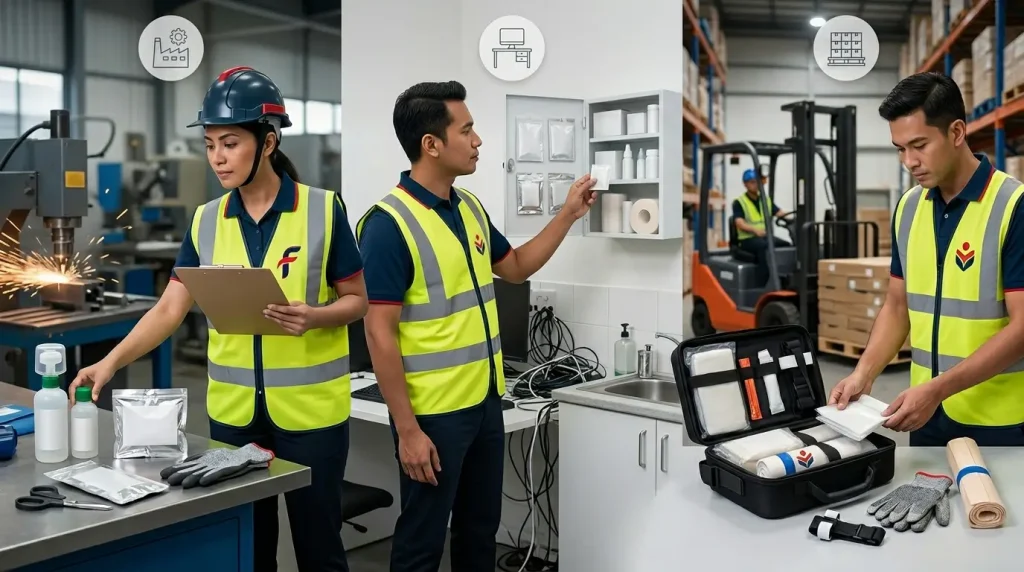
A workplace first aid solution should reflect realistic risks rather than follow a “one kit fits all” mindset.
For example, a low-risk office may focus on accessible first aid supplies, clear storage and trained personnel.
A factory may need additional consideration for cuts, burns, impact injuries, machinery-related incidents or the distance between work areas and the nearest response point.
The goal is not to imply that equipment prevents every incident.
The goal is to help the organisation prepare responsibly so that suitable supplies are available, personnel know their role and escalation can happen without unnecessary confusion.
A well-planned setup may also make inspections, replenishment and handovers easier for safety, HR and operations teams.
A sickbay or designated medical-response area can help an organisation manage minor incidents, temporary discomfort or first-response situations in a more organised way.
The space does not need to function like a hospital ward.
Its purpose is to provide a suitable area where staff, students, visitors or other occupants can receive basic support while the organisation follows its internal procedures and decides whether further medical attention is required.
Medical device suppliers may assist organisations by helping them identify practical equipment and supplies for the available space.
This may include first aid items, basic furniture, storage solutions, selected equipment and consumables that fit the intended use of the room.
A practical sickbay setup should consider more than products. It should also consider access, privacy, cleanliness, storage, record handling, replenishment and escalation.
Questions that can guide planning include:
A supplier can help clarify available product options, but the organisation remains responsible for setting workable internal procedures.
Emergency-readiness planning may involve more than keeping a first aid kit in a cupboard.
In some environments, organisations may consider trauma bags, AED supplies, spare pads, battery-related items, emergency signage or other response equipment based on their setting and risk assessment.
Medical device companies can help by providing access to relevant products and explaining practical supply considerations such as product purpose, storage, inspection needs and replacement planning.
However, equipment should never be viewed as a complete emergency system on its own.
An AED, trauma bag or first aid kit is most useful when people know where it is, how it fits into the workplace response process and when to contact emergency services or seek professional help.
Organisations should therefore consider equipment together with:
This is especially relevant in larger factories, schools, campuses, warehouses and multi-floor workplaces where incidents may occur far from reception areas or management offices.
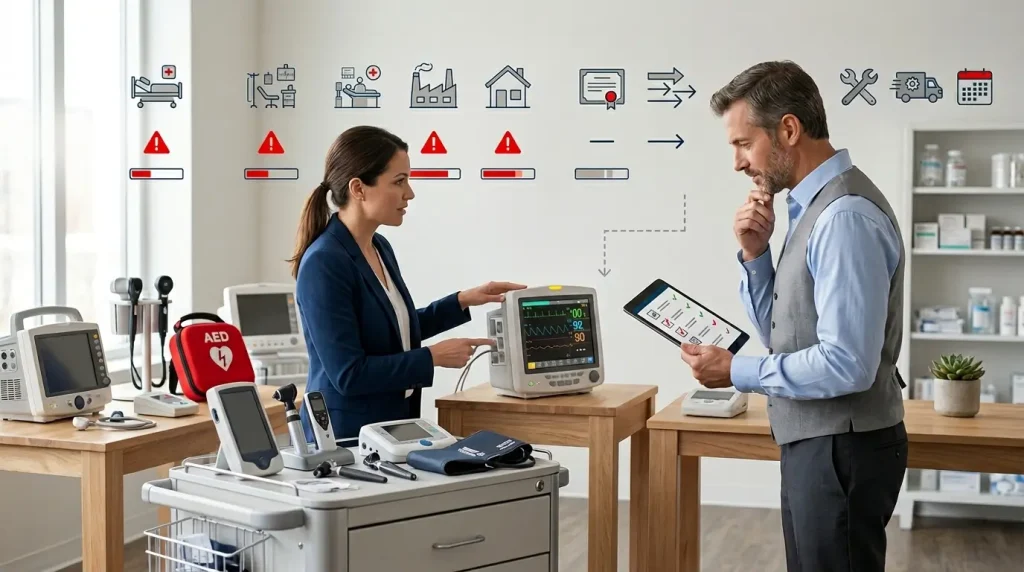
Not every product marketed as a medical or health-related item is suitable for every environment.
Before ordering, procurement and safety teams should understand what the product is intended to do, who will use it and whether the organisation can support its proper storage, handling and maintenance.
Medical device companies may help buyers ask better questions before making a purchase.
Those questions may include:
A more reliable purchasing process begins with a site-specific needs review.
Instead of purchasing based only on price, teams can compare suppliers based on product suitability, clarity of information, ability to support replenishment planning, responsiveness to questions and whether the product range aligns with the organisation’s actual needs.
For higher-risk, specialised or clinical-use products, organisations should seek appropriate professional input before making decisions.
This helps prevent a mismatch between the device, the intended environment and the skills of the people expected to use it.
Caregivers may need access to practical devices and supplies that support day-to-day care, comfort, monitoring or safer home-care routines.
The right choice will depend on the person’s condition, the device’s intended use and the level of professional supervision required.
Medical-device innovation is also moving towards more connected tools, including wearable devices, remote-monitoring technologies and digital platforms that can support healthcare workflows in certain settings.
For workplaces and institutions, these developments may eventually influence how some health-support processes are managed.
However, adoption should be careful and purpose-led.
Connected devices may be relevant when an organisation or care provider has a clear use case, appropriate professional oversight, suitable data-management processes and a realistic plan for user support.
They are not automatically necessary for every workplace, sickbay or caregiver environment.
Before adopting a connected device, decision-makers should consider:
The purpose should always be to support a clearer care or readiness process, not to replace qualified medical judgment.
The right supplier is not only the one with the largest catalogue. A useful supplier should help your team identify what is appropriate for your operational setting and explain the practical requirements behind the products.
Before choosing a supplier, consider whether they can help you:
For broader updates on workplace health, safety and organisational readiness, explore AIDEL’s Information Company resources.
A practical supplier relationship should make it easier for your team to prepare responsibly, maintain clearer processes and make more informed decisions about the equipment and supplies used in your environment.
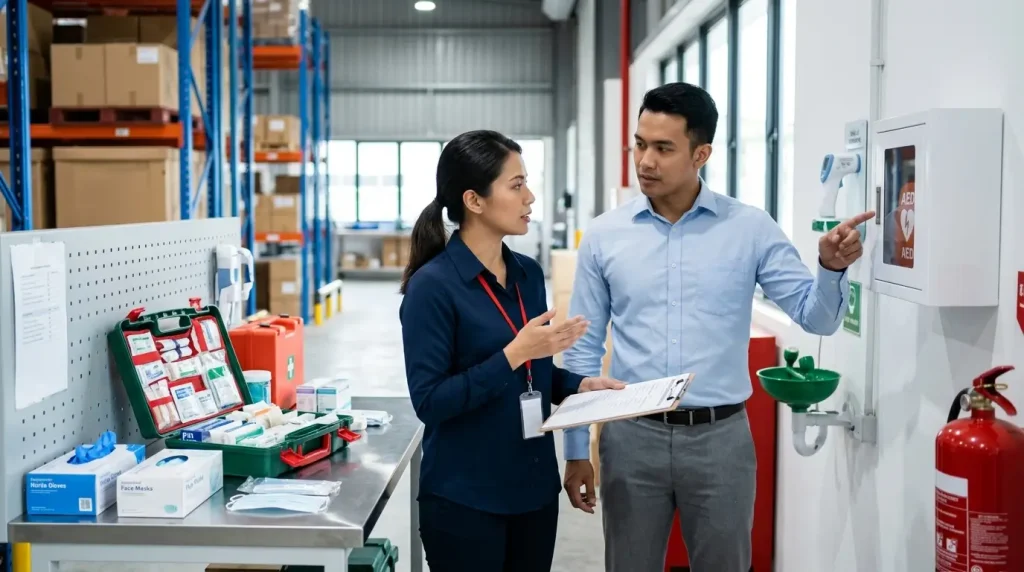
Medical device companies in Malaysia can help hospitals, clinics, factories, institutions and caregivers access suitable supplies, equipment and practical support.
However, the best solution is rarely based on a catalogue alone.
A responsible decision starts with the environment: the people on site, the likely risks, the type of incident or care needed, the available space, and the level of staff readiness.
From there, organisations can choose supplies and equipment that fit their intended use, storage conditions, replenishment needs and internal response procedures.
For workplaces, this may involve reviewing first aid supplies, trauma-response items, AED-related equipment, sickbay needs, screening tools or staff training requirements.
For clinics, hospitals and caregivers, it may involve selecting devices and consumables that are appropriate for the care setting and supported by suitable professional guidance.
AIDEL supports organisations that want to strengthen workplace health, first aid readiness, sickbay planning, emergency preparation and practical medical-supply decisions.
To understand AIDEL’s approach and wider role in workplace health and safety, learn more about AIDEL.
It depends on the supplier’s product range, the organisation’s needs and the intended use of each item.
Some suppliers may support multiple areas, such as first aid supplies, sickbay equipment, screening tools, wound-care items and selected medical products.
However, hospitals, clinics and specialised care environments may also require products, technical support or professional input that go beyond general workplace-readiness needs.
Buyers should clarify the intended setting and product requirements before ordering.
Start by identifying the intended use, workplace risks, number of people on site, available storage, staff responsibilities and replenishment needs.
The team should also ask whether the product requires training, special handling, replacement accessories, routine inspections or professional oversight.
For specialised or higher-risk products, obtain suitable professional guidance before making a final decision.
No. Connected devices may be useful in some situations, but they are not automatically necessary for every workplace, sickbay or home-care environment.
Before adopting one, organisations should consider whether there is a clear need, who will manage the information, whether users need training, how privacy will be handled and when professional follow-up may be required.
Connected devices should support an existing care or readiness process, not replace qualified medical judgment.
