

A urine drug screening test can detect evidence of certain drugs or their metabolites after the substance has been processed by the body.
That is why a drug test pee can sometimes identify recent drug exposure even after the immediate effects of a substance are no longer apparent.
For HR and corporate management teams, however, the result needs to be understood in context.
A urine screening result does not automatically show whether an employee is currently impaired, nor does an initial positive result by itself establish a final medical, employment or legal conclusion.
The practical question is therefore not simply whether a urine test can detect drugs, but what it detects, how long that evidence may remain detectable, what can influence the result, and how an organisation should handle screening results responsibly.
The right test panel and a clear internal procedure are just as important as the screening device itself.

A drug test pee, more formally a urine drug test, examines a urine sample for evidence of particular drugs or substances the test is designed to identify.
Depending on the testing method, this can include the drug itself or substances called metabolites, which are produced as the body processes a drug.
This is why urine testing can provide evidence of drug exposure even when the substance is no longer producing noticeable immediate effects.
The test is looking for detectable evidence in the sample rather than trying to determine how an employee feels at the moment of testing.
For HR teams, that distinction matters.
A urine screening result should be understood as one part of a defined workplace screening process, rather than interpreted in isolation.
A metabolite is a substance formed when the body breaks down a drug.
Depending on the drug and the testing method, urine testing may identify the original substance, a metabolite, or a related marker.
The exact target depends on the test being used.
Therefore, organisations should not assume that every urine drug test detects the same substances.
A screening panel defines which drug categories the test is designed to screen for.
Commonly screened categories can include amphetamines, cocaine, cannabis/THC, opioids and PCP, although the exact combination varies between tests.
For an employer, the practical question is therefore not simply, “Does this test detect drugs?” It is:
“Which substances does this particular panel screen for, and does that match our workplace procedure?”
Urine can retain detectable evidence of drug exposure after the immediate effects have diminished.
MedlinePlus notes that drug tests may find signs of drugs taken hours to several days or more before testing, depending on the circumstances.
This helps explain why a urine screening result should not automatically be described as evidence of current impairment.
Consider two separate questions:
A urine screening test primarily addresses the first question.
It does not, by itself, establish the second.
That distinction is especially important for HR and management teams.
If a screening programme has employment or safety consequences, the organisation should have a documented procedure explaining how results are handled and when further testing or professional assessment is appropriate.
A multi-panel urine test is designed to screen for several specified drug categories within the same testing format.
The actual panel is product-specific, so the number and type of parameters should be checked before an organisation places an order.
Common urine drug-screening targets include categories such as:
AIDEL’s Cup Test Multi-Panel Drugs of Abuse Test enquiry page, for example, provides options for organisations to specify required parameters rather than assuming that one panel suits every workplace.
The listed parameters include options such as AMP, BAR, BZD, COC, MDMA, MET, MOR/OPI, OXY, PCP and THC, among others.
Before purchasing a screening product, HR or safety teams should identify:
The goal is not to select the test with the longest list of parameters simply because it appears more comprehensive.
The better approach is to match the panel to the organisation’s documented screening requirements.
There is no single detection period that applies to every drug or every employee.
MedlinePlus explains that how long a drug remains detectable can depend on factors including the type of drug, amount used, how long the person had been using it and how the person’s body responds to the drug.
Cleveland Clinic similarly notes that the body metabolises different drugs at different rates, meaning detection time can vary substantially between substances.
For employers, this means a statement such as “a urine test detects drug use for exactly X days” can be misleading without specifying the substance, testing method and relevant circumstances.
A more responsible way to describe a urine drug test is that it can detect specified substances or their metabolites within an applicable detection window.
The result should therefore be interpreted according to the test’s intended use and the organisation’s established procedure rather than an assumed universal timetable.
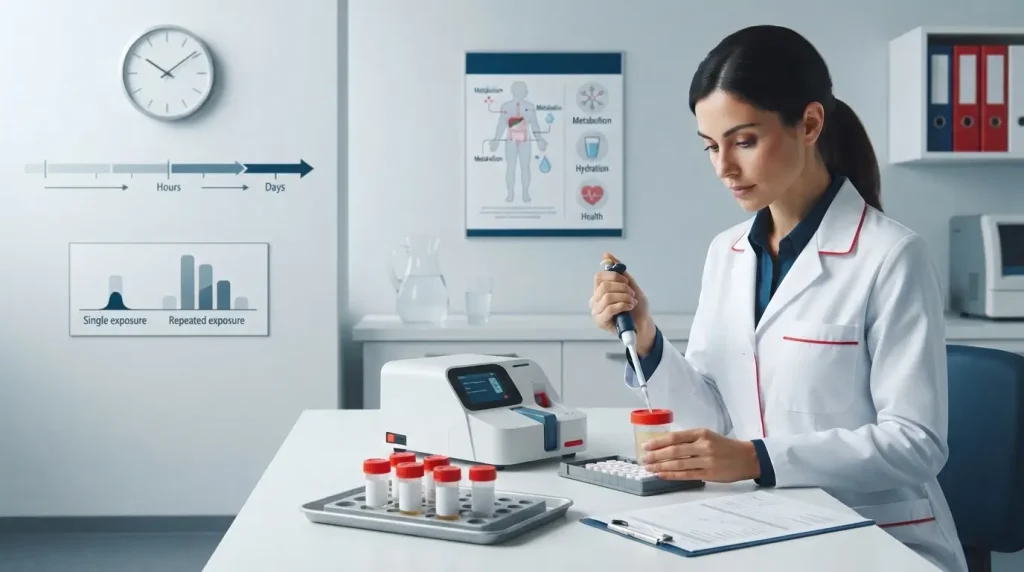
Several factors can influence whether evidence of a substance is detectable when a urine sample is collected.
Different drugs are processed and eliminated differently.
This is one reason detection windows vary between drug categories.
The amount used and the person’s pattern of use can affect how long detectable evidence remains.
MedlinePlus specifically identifies the amount used and duration of use as factors that can influence how long a drug lasts in the body.
People do not all process substances in exactly the same way. Individual biological responses can therefore affect the detection period.
A result is influenced by when the specimen is collected relative to the relevant exposure.
A test performed at a different point in time may not produce the same result.
The test must be designed to screen for the substance in question.
A negative result for one panel should not be interpreted as evidence that every possible drug has been ruled out.
For workplace screening, these factors reinforce the need for a consistent process.
HR teams should document what is being tested, how samples are handled, how results are recorded and what happens if a screening result requires further investigation.
A positive urine screening result and current impairment are not the same finding.
A urine drug test is intended to detect evidence of a specified drug or related substance in the sample.
It does not, by itself, establish the employee’s current level of impairment.
Cleveland Clinic notes that a single drug test also cannot determine the frequency or intensity of substance use.
This distinction is particularly important when an organisation is considering what to do after an initial positive screening result.
A workplace screening test can be useful as an initial screening step, but organisations should establish in advance what their procedure requires when a result is positive or otherwise requires further review.
Where a result could lead to an employment, medical or other significant decision, the organisation should use an appropriate recognised confirmation process rather than treating an initial screening result as automatically conclusive.
The precise confirmation pathway depends on the organisation’s testing procedure and the circumstances involved.
A responsible workplace process should distinguish between:
This helps HR teams avoid turning a screening result into an unsupported conclusion about an employee.
Organisations should also obtain appropriate professional or legal advice when their procedures involve employment rights, disciplinary action or specific regulatory requirements.
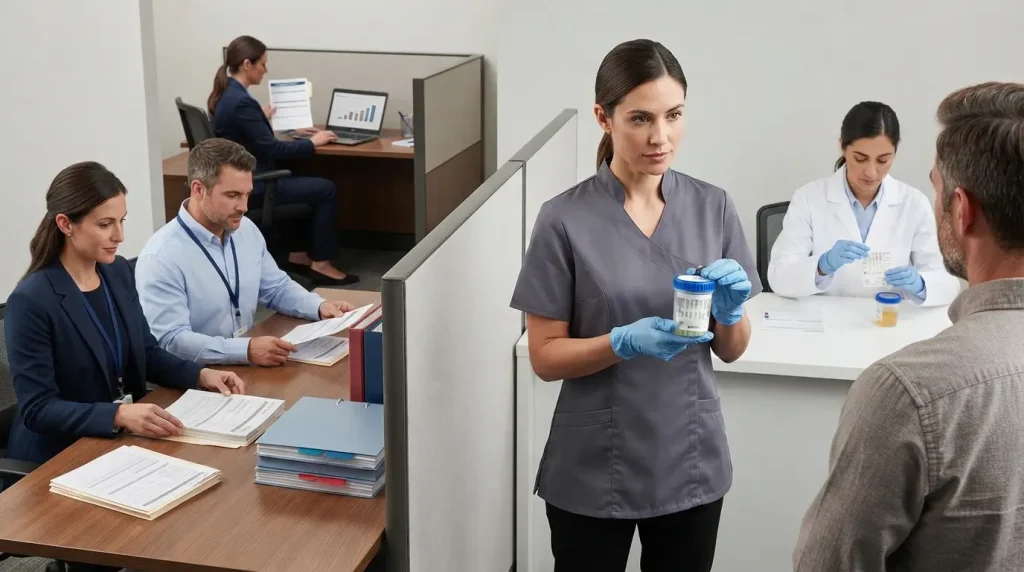
For an HR or management team, selecting a urine screening product is only one part of establishing a workable screening process.
The product should fit the organisation’s screening purpose, required panel, expected testing volume, sample-handling process and internal documentation requirements.
AIDEL provides urine drug and alcohol screening products for organisations and allows customers to specify requirements when enquiring about screening solutions.
Its Cup Test Multi-Panel product page identifies considerations including the purpose of testing, test type, panel requirements, expected quantity and frequency, documentation needs and storage/expiry considerations.
A practical HR checklist includes:
These questions can help an organisation evaluate screening supplies as part of a broader SOP rather than treating the test kit as the entire screening programme.
See AIDEL’s Cup Test Multi-Panel Drugs of Abuse Test
The right choice will depend on the organisation’s own requirements.
AIDEL’s enquiry process allows employers to provide information about the intended test type, required parameters, quantity and frequency so that suitable options can be considered for the workplace or operational environment.
A drug test pee can help identify specified drugs or their metabolites in a urine sample, but the result needs to be interpreted within its proper context.
What can be detected depends on the substance, test panel and applicable detection window, while factors such as the pattern of use and timing of sample collection can affect whether evidence is detectable.
For HR and corporate management teams, the most important distinction is between detecting evidence of drug exposure and determining current impairment.
An initial screening result should not automatically be treated as a final medical, employment or legal conclusion.
A practical workplace screening process should therefore combine the appropriate screening product with a clear internal SOP covering the test panel, authorised personnel, documentation, privacy, result handling and any required confirmation process.
If your organisation is reviewing its workplace screening supplies, AIDEL’s Cup Test Multi-Panel Drugs of Abuse Test can be considered as one of the available urine screening formats.
Organisations should identify their required screening parameters, expected testing volume and internal procedure before selecting a product.
A urine screening result should not automatically be treated as a final employment decision. Employers should follow their documented workplace policy and determine whether an appropriate confirmation or professional review is required before taking consequential action.
No. Multi-panel tests can differ in the drug categories and parameters they are designed to screen for.
Employers should check the specific panel configuration against their organisation’s screening requirements before selecting a product.
No. A negative result means the specified target was not detected by that screening test under its applicable conditions.
It should not be interpreted as proof that every possible drug has been ruled out or that drug exposure could never have occurred.
Where a positive screening result could lead to an important employment, medical or other consequential decision, organisations should have an appropriate confirmation and result-review process defined in their SOP.
An initial screening result should not automatically be treated as conclusive evidence.
