
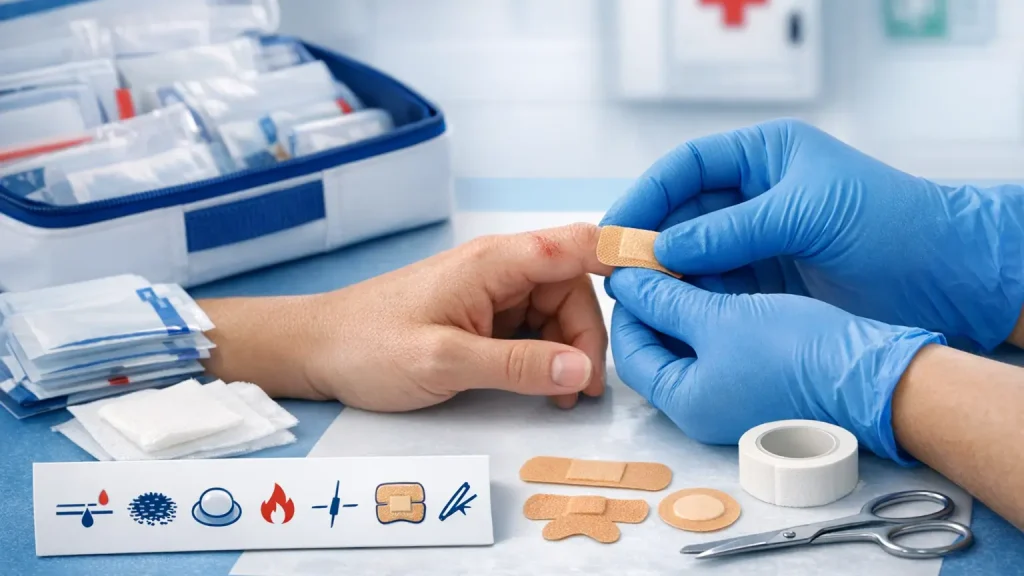
Choosing the right wound dressing plasters standardizes first aid response, reduces contamination risk, and improves audit readiness for clinics, factories, and safety officers managing frequent minor trauma during daily operations.
combine an adhesive carrier with an absorbent or non-adherent pad to protect the wound bed, control mild exudate, and reduce friction, allowing safe continuation of work until reassessment.
Match injury type to dressing function—absorbency for cuts, non-adherent pads for abrasions, cushioning for blisters—then standardize a mixed-size inventory and restock through an OSHA-aligned first aid kit supply plan.
Wound dressing plasters are one of the most-used consumables in clinics, factories, and even medical stations because they solve a common operational problem: minor injuries happen daily, and response must be fast, clean, and consistent.
In real workplace settings—assembly lines, kitchens, warehouses, laboratories, and outpatient care—“small” wounds like cuts and abrasions can become big issues if the wrong plaster is used.
A strip plaster that lifts due to sweat or glove friction can expose a wound to contaminants, trigger repeat dressing changes, and increase incident reporting workload for Safety and Health Officers.
In healthcare institutions and private practices, the wrong dressing choice can also compromise infection control expectations and patient comfort, especially when skin is fragile or adhesive-sensitive.
This guide is built for decision-makers who want reliable outcomes: procurement teams standardizing first aid stock, caregivers needing practical guidance, and compliance-driven organizations preparing for audits and inspections.
We’ll break down 7 common workplace injury scenarios and match each one to the plaster characteristics that matter most—absorbency, non-adherent pads, waterproof backing, secure fit for joints, and skin-friendly adhesives.
AIDEL supports Malaysian organizations with a curated range of medical supplies sourced from trusted manufacturers, plus expert guidance, timely delivery, and training services that strengthen workplace readiness..
Feedback from local buyers consistently highlights smooth purchasing processes, knowledgeable support, and the ability to source broader first aid needs efficiently—key factors when you’re managing stock across multiple sites or responding to urgent replenishment.
For workplace cuts, the best wound dressing plasters combine a sterile absorbent pad, reliable edge adhesion under sweat and glove friction, and enough coverage to protect against contamination during continued task performance.
The most effective wound dressing plasters for active hands use an absorbent wound pad, flexible backing that moves with joints, and adhesive that resists moisture so the dressing doesn’t peel during lifting, gripping, or repeated handwashing.
When choosing wound dressing plasters, light oozing can be managed with standard absorbent pads, but persistent oozing usually needs a larger pad area or a sterile dressing plus additional securement to maintain pressure and cleanliness.
You should switch from a plaster to a sterile pad plus bandage wrap when bleeding doesn’t settle with direct pressure, when the wound is larger than the plaster pad, or when movement repeatedly breaks the adhesive seal.
Urgent escalation is appropriate when bleeding won’t stop, a deep cut exposes underlying tissue, there is a foreign object embedded, numbness or loss of function appears, or contamination risk is high in industrial environments.
For finger and knuckle cuts, wound dressing plasters should prioritize shape-fit and flexibility because the highest failure rates happen at joints where repeated bending lifts edges and compromises the sterile barrier.
Wound dressing plasters designed for knuckles and fingertips reduce failure by wrapping around curved surfaces and anchoring on multiple sides, which lowers peel forces compared with straight strips on high-motion skin.
For abrasions, the best wound dressing plasters are those with non-adherent contact layers or non-stick pads, because scraped skin can stick to plain gauze and cause pain and re-bleeding during removal.
Non-adherent pads matter because they protect the wound bed without bonding to new tissue, maintaining comfort and reducing dressing-change trauma—an important consideration for clinics, caregivers, and onsite first-aid responders.
Wound dressing plasters with a non-stick pad or a low-adherent contact layer are better for grazes, because they separate the absorbent layer from the wound surface and reduce shear injury at removal.
Large abrasions do best with wider coverage and clean margins because partial coverage leaves raw skin exposed to friction and debris, while overly occlusive coverage can macerate surrounding skin if not monitored.
A larger island dressing is appropriate when the abrasion exceeds the pad size, when uniform coverage is needed under PPE, or when the wound sits on a high-friction area like forearms or shins.
For friction blisters, the best wound dressing plasters are cushioning, protective, and designed to reduce shear forces, with hydrocolloid-style dressings often favored for clean, uninfected blisters and rubbing hotspots.
Dressing types that support friction management include hydrocolloid plasters and padded blister plasters, because they form a protective interface that reduces rubbing and shields nerve endings for improved comfort.
Hydrocolloid-style wound dressing plasters can absorb moisture and form a gel-like protective layer, while standard adhesive bandages mainly cover and protect but typically provide less cushioning and friction reduction.
Avoid occlusive coverage when the blister shows infection signs, when there is significant redness spreading, severe pain, pus, or when the worker has diabetes or immunocompromising conditions requiring clinical oversight.
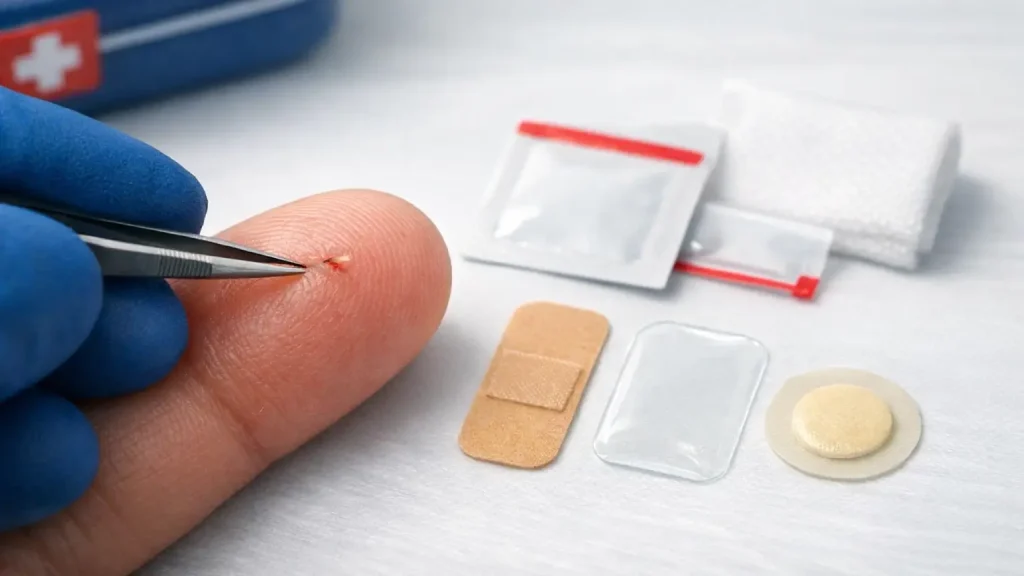
For minor punctures and splinters, wound dressing plasters should be used only after appropriate cleaning and assessment, because the main risk is infection from contamination rather than surface abrasion alone.
Cleaning reduces infection risk by removing surface contaminants, controlling bleeding with direct pressure, and applying a sterile cover so the puncture site stays protected from ongoing exposure during work.
A small-entry puncture is best protected with a sterile, well-sealed plaster that stays on under moisture, but any retained foreign body or deep penetration should trigger medical referral rather than repeated re-dressing.
For small burns, the safest approach is to protect the area with an appropriate non-adherent sterile cover and avoid adhesives directly on fragile burned skin, because removal can worsen tissue injury.
Coverings that minimize trauma include non-adherent sterile dressings secured with gentle tape, because they protect the area from friction while avoiding the painful “stick-and-tear” effect of direct adhesive contact.
Avoid direct adhesive over burns when skin is blistered, fragile, or weeping, and instead secure a non-adherent dressing around intact skin to prevent secondary damage during dressing changes.
For small lacerations with mild ongoing bleeding, wound dressing plasters should support pressure, absorbency, and secure fixation, because simple coverage without compression can allow continued seepage and repeated changes.
Prioritize compression first to stop bleeding, then absorbency to manage seepage, and finally securement to keep the dressing stable—especially in factories where motion and perspiration rapidly degrade weak adhesives.
Tape plus wrap can outperform a single plaster at wrists, knuckles, and ankles because mechanical fixation reduces peel forces, maintaining a stable barrier where adhesive-only products frequently lift.
For sensitive skin, the best wound dressing plasters use skin-friendly adhesives and low-trauma removal characteristics, reducing the risk of irritation and repeated skin stripping in staff who need frequent dressing changes.
Common causes include frequent removal, prolonged wear under occlusion, sweat and detergent exposure, and excessive tension during application, all of which can compromise the skin barrier and trigger contact irritation.
Hypoallergenic, low-trauma adhesives and gentle paper-style tapes reduce MARSI risk when staff require repeated changes, especially in healthcare settings where fragile skin and strict hygiene protocols frequently overlap.
The quickest matching method is a function-first approach—bleeding control, non-adherent protection, cushioning, or secure fixation—so responders can select the correct wound dressing plasters in seconds without over-treating minor injuries.
A one-minute triage asks whether bleeding is controlled, whether the wound is clean, whether the site is high-motion, and whether skin is sensitive, which determines whether a plaster alone is sufficient or escalation is needed.
A practical selection grid:
Documenting the mechanism of injury, dressing type used, time applied, reassessment plan, and escalation triggers supports workplace governance and helps safety teams justify stocking decisions, training needs, and restocking frequency.
Consistent restocking comes from a single standardized procurement list that covers common sizes and functions—plasters, tapes, bandages, and compresses—so multi-site organizations avoid stock gaps and mismatched products.
Procurement should prioritize sterile packaging integrity, clear labeling, expiry control, and reliable availability, because these variables affect infection control outcomes, audit readiness, and operational continuity across clinics and industrial sites.
Standardize by setting a core mix (strip, knuckle, fingertip, large pad, non-adherent options), defining minimum par levels per first-aid station, and rotating stock using a simple first-expire-first-out routine.
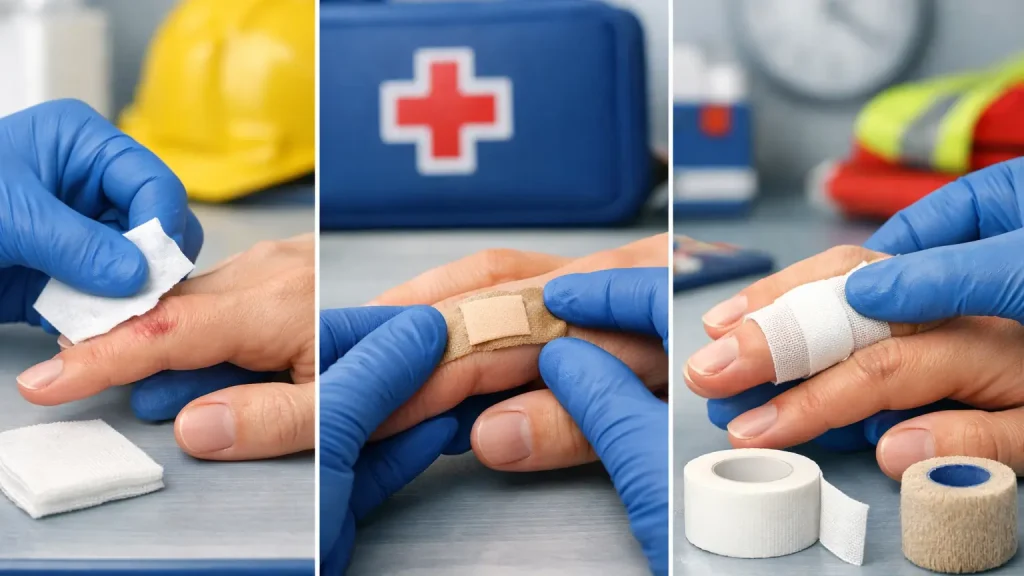
Correct application maximizes adherence and barrier performance by combining hygiene, dry skin preparation, correct pad placement, and gentle edge fixation, which reduces early lifting and repeat dressing changes mid-shift.
The most common mistakes are applying to damp or oily skin, touching the pad surface, choosing a pad that is too small for the wound, and stretching tape tightly, which increases peel forces and skin irritation.
Improve adhesion by cleaning and drying surrounding skin, avoiding lotions, anchoring the center first, smoothing outward to remove wrinkles, and adding tape support at high-motion edges rather than repeatedly replacing the same lifted plaster.
Well-chosen dressings reduce infection risk, improve comfort, and prevent repeated re-dressing during shifts, especially in high-motion, high-sweat roles and clinical environments.
For the seven common injuries covered here, match function to need: absorbency for cuts, non-adherent pads for abrasions, cushioning for blisters, and secure fixation for joints.
Standardizing sizes and materials across sites also makes restocking predictable and helps Safety and Health Officers maintain consistent first aid readiness.
If you’re standardizing first aid consumables across a clinic, factory, or multi-site operation, build a core mix of plasters, tapes, and sterile dressings that fits your most common incidents and storage conditions.
For consistent replenishment and broader kit completeness, explore industrial first aid kit supplies and align your stock plan with your First Aid Kit Essentials checklist so every station stays audit-ready and response-ready.
Wound dressing plasters protect the wound bed from contamination, absorb mild exudate, and reduce friction during movement, making them ideal for quick response to minor injuries before reassessment or escalation.
Switch to a sterile pad and bandage when bleeding continues, the wound is larger than the pad, edges won’t stay sealed due to motion or sweat, or the injury is contaminated and needs more robust coverage.
Wound dressing plasters should be changed when they become wet, dirty, loosened, or saturated, because barrier failure increases infection risk and causes repeated handling of the wound and surrounding skin.
Skin-sensitive users do better with low-trauma adhesives and gentle tapes, because repeated removal can cause irritation and skin stripping, especially in healthcare environments with frequent hygiene routines.
First aid stations should be placed at point-of-use near handwash access, gloves, and waste disposal, because response speed and clean technique depend on workflow, not just having supplies in storage.