
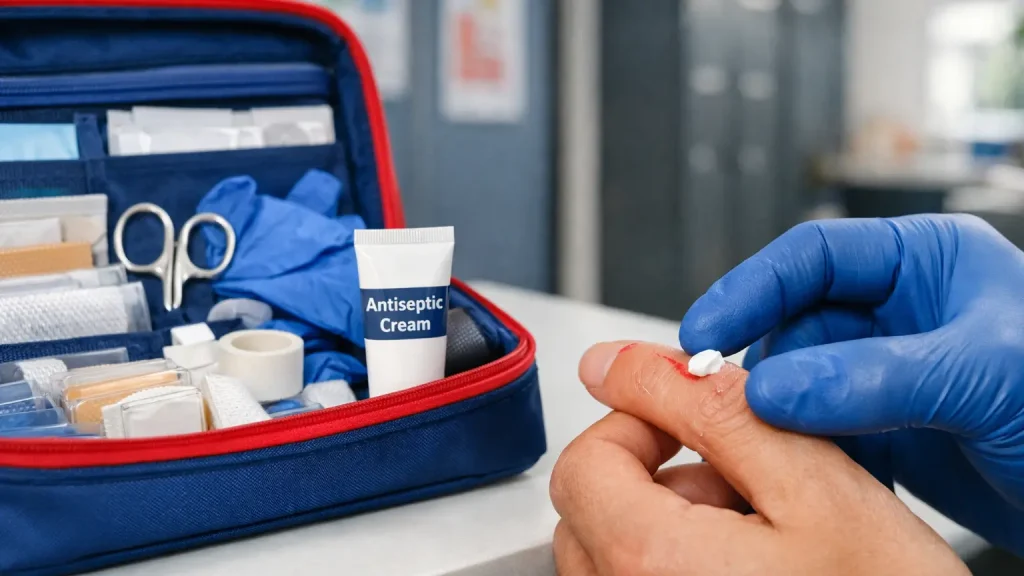
A: It means integrating a topical antiseptic option into a repeatable workplace SOP—so first aiders, safety officers, and clinic staff can respond consistently, reduce infection risk, and stay audit-ready across shifts and sites.
A: bacidin antiseptic cream is typically used after appropriate cleansing, then followed by protective dressing, so minor cuts, abrasions, superficial burns, and insect bites can be managed with controlled technique and clear escalation rules.
A: Align your first aid kit contents, write a simple 7-step SOP, train responders on hygiene and documentation, and set reorder triggers—so procurement, compliance, and caregivers avoid stockouts and inconsistent on-site treatment.
bacidin antiseptic cream is often treated as a “nice-to-have” item, but in real workplace first aid, it can be the difference between a clean, controlled response and a preventable infection pathway.
In factories, offices, warehouses, and even outpatient settings, minor cuts, abrasions, superficial burns, and insect bites happen during routine operations—yet the operational risk comes from inconsistent first aid technique, poor hygiene controls, and delayed escalation when a wound is not “minor” anymore.
For Safety and Health Officers, the goal is simple: reduce incident impact, standardise first response, and stay audit-ready.
A practical first aid setup should not rely on one experienced first aider being present; it should work across shifts, sites, and skill levels with repeatable steps, clear decision rules, and controlled consumables.
That’s where a structured 7-step add-on approach becomes valuable: it turns a topical antiseptic option into a documented workflow—cleanse, apply appropriately, cover correctly, record use, trigger restock, and reinforce training—without pretending it replaces clinical judgment.
For healthcare institutions and private practices, consistent minor wound care supports patient flow and reduces avoidable complications, while procurement teams need reliable specifications and continuity of supply.
For caregivers and individuals, the benefit is knowing what “correct use” looks like and when to stop self-treatment and seek medical attention.
This article breaks down how bacidin antiseptic cream fits into workplace first aid in a way that is practical, compliant, and easy to train.
bacidin antiseptic cream is a topical antiseptic product used in minor wound care to support infection-risk reduction, standardised first aid practice, and faster on-site response for cuts, abrasions, superficial burns, and insect bites in workplaces.
In operational settings like factories, clinics, and offices, bacidin antiseptic cream is most relevant when staff face frequent low-to-moderate skin injuries where contamination control and consistent technique matter as much as speed.
Typical workplace scenarios include:
A practical first aid workflow prioritises cleansing and assessment first, because topical antiseptics are an adjunct—not a substitute—for deciding whether a wound needs medical evaluation, irrigation, suturing, tetanus review, or infection management.
Operational rule-of-thumb for safety teams:
Bacidin cream uses are most practical when first aiders need a repeatable, low-friction way to support minor wound management while keeping hygiene controls tight and staff behaviour consistent across shifts.
In workplaces, Bacidin cream uses typically fit into cases where the skin barrier is mildly compromised but the wound is not complex, not heavily contaminated, and not showing “must-refer” signs that demand clinical assessment.
Use cases that safety officers commonly map into SOPs:
Bacidin cream uses should be avoided when the wound is deep, heavily contaminated, involves the eye/mucosa, has chemical/thermal severity, shows infection signs, or when employee health status increases risk (e.g., diabetes complications or immunosuppression).
Escalation triggers to train into staff behaviour:
A good SOP turns Bacidin cream uses into a short, teachable sequence that reduces contamination, avoids overuse, and forces a decision checkpoint so first aiders don’t apply products reflexively to unsuitable wounds.
Cross-contamination controls should be written as mandatory steps—gloves, hand hygiene, single-use applicators or clean gauze, and disposal discipline—because the biggest operational failure mode is “good product, bad technique.”
Minimum controls for workplace SOPs:
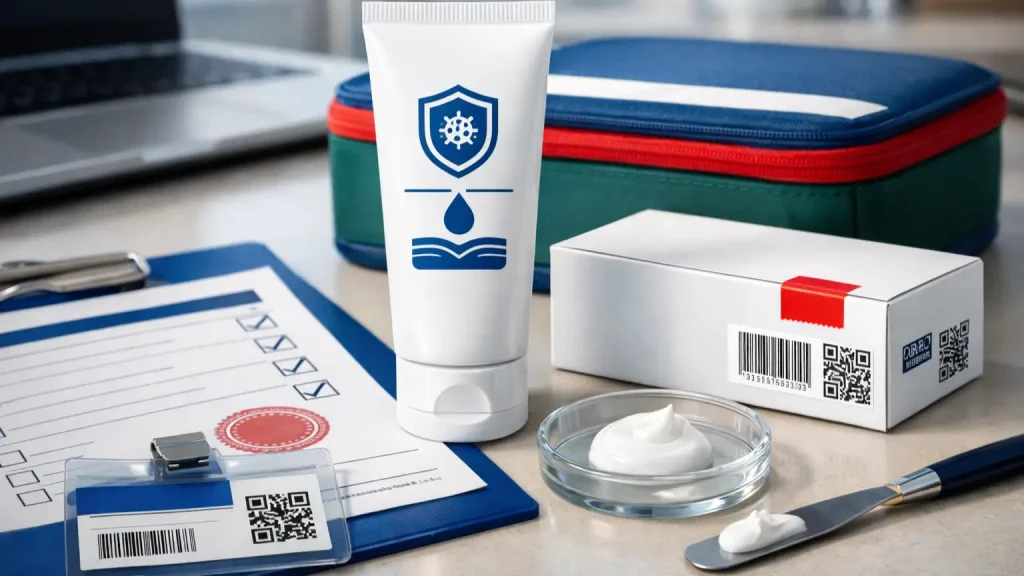
Bacidin Antiseptic Cream ingredients matter because safety officers and procurement teams must align product strength, indications, allergy risks, storage requirements, and label integrity with workplace SOPs and audit documentation.
The active ingredient profile is the primary determinant of how the cream functions as an antiseptic, which is why institutional buyers verify label claims, concentration, and intended indications rather than relying on brand familiarity.
Procurement verification checklist:
bacidin antiseptic cream ingredients can trigger sensitivity in some users, so safety officers should document known allergies, train staff on reaction recognition, and keep incident notes consistent to support follow-up care and occupational health review.
What to include in documentation workflows:
For compliance readiness, label details provide the evidence chain for “what was used” and “why it was appropriate,” helping safety audits, incident investigations, and procurement governance for multi-site operations.
Approved-item lists should record the essentials that keep sites consistent and reduce purchasing errors, especially when multiple branches reorder supplies with different staff and different vendor habits.
Recommended fields:
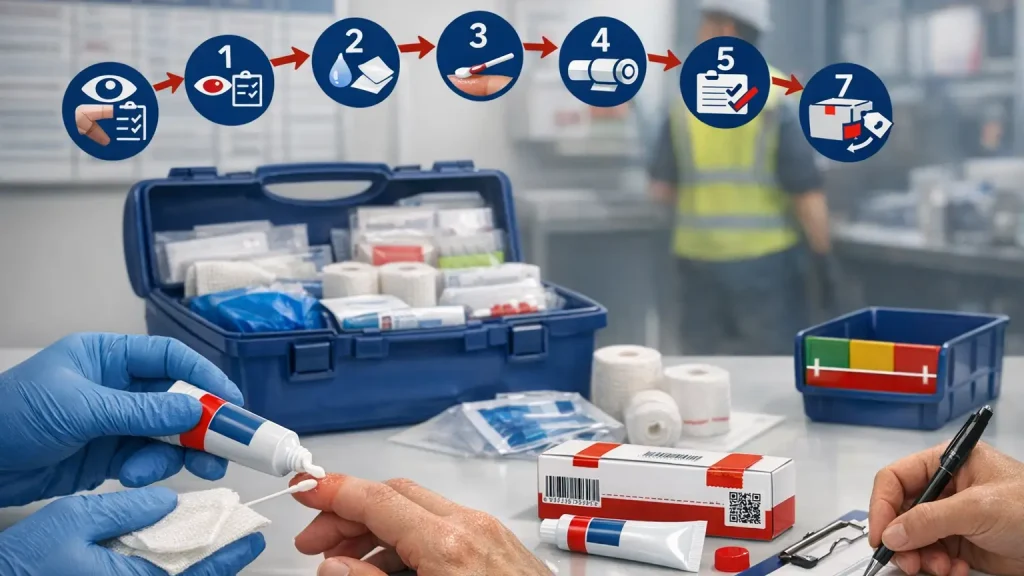
bacidin antiseptic cream becomes operationally valuable when it is embedded into a 7-step workflow that forces assessment, hygiene control, correct application, dressing discipline, documentation, refresher training, and stock governance across all shifts and sites.
A well-structured 7-step flow reduces variation, prevents misuse, and makes first aid outcomes more consistent, because each step adds a control point that procurement and safety officers can train, audit, and improve.
Define “approved cases” (minor cuts, grazes, superficial burns, insect bites) and “must-refer cases” (deep wounds, major burns, bites, infection signs, chemical exposure), and publish these rules inside the first aid box.
Clean the area using appropriate first aid cleansing methods and clean materials, because topical products applied onto dirty skin can trap contaminants and complicate healing expectations.
Apply a thin layer using clean gauze or a clean applicator while avoiding tube contact with the wound, because clean technique lowers cross-contamination risk and keeps product usage predictable for restock control.
Choose dressings based on wound type—non-adherent pads for grazes, suitable coverings for superficial burns, and secure bandaging for high-movement areas—so the site stays protected and staff avoid repeated touching.
Document what happened, what was used, and whether escalation occurred, because incident data is the feedback loop that improves your first aid SOP and supports compliance reporting.
Train for repeatability using short drills and a one-page SOP, because high turnover and shift changes are the main reasons first aid quality varies even when supplies are available.
Control stock with expiry-first rotation, minimum thresholds, and post-incident replenishment rules, because first aid readiness fails most often due to missing consumables rather than missing intent.
High-traffic sites benefit from a weekly quick-check plus incident-based replenishment, while lower-traffic sites may manage monthly checks, provided that every use triggers a restock action and a log entry.
Failure signs include stockouts, expired items, inconsistent documentation, repeated minor wound complications, staff uncertainty about escalation, and ad-hoc substitutions that create variability across departments.
Comparing formats helps procurement teams match application control, spill risk, staff skill levels, and SOP simplicity, because a cream, solution, or irrigation-first approach can each succeed or fail depending on operational behaviour.
Creams often provide controlled application and portability, solutions can require careful handling and may introduce dilution or spill risks, and irrigation-first guidance prioritises mechanical cleaning—so the best choice depends on site hazards and training maturity.
If your site has frequent minor injuries and mixed staff capability, a controlled-application format can reduce handling error; if your site has higher contamination risk, stronger emphasis on cleansing and escalation may be more effective than adding products.
Some guidance highlights that certain antiseptics can irritate tissue or delay healing in some scenarios, so safety officers should use clear rules, avoid over-application, and prioritise cleansing and referral criteria.
Balance comes from a decision framework: cleanse first, use topical antiseptics selectively for minor cases, avoid use on unsuitable wounds, and escalate early when red flags exist—then audit outcomes using incident data.
Buying continuity is achieved by standardised specifications, verified suppliers, consistent ordering records, and site-level minimum stock rules, because inconsistent procurement creates inconsistent first aid outcomes and weakens audit readiness.
Procurement should verify active ingredient strength, pack size, expiry, authenticity cues, and consistent supplier documentation, because small mismatches lead to staff confusion and SOP drift across multiple branches.
Use a basic reorder model: define minimum stock, track incident-based usage, allocate by headcount and risk level, and trigger replenishment immediately after use to prevent silent depletion.
Bundling works when the cream is aligned with gloves, cleansing supplies, gauze, dressings, disposal items, and a printed SOP from First Aid Kit Essentials, because the product alone doesn’t create readiness—systems do.
Aligning companion items ensures the “clean–apply–cover–dispose–document” chain is possible at the point of use, with AED supplies and spare parts planning reducing corner-cutting behaviours that cause contamination and inconsistent outcomes.
A 7-step first aid workflow makes minor wound care more consistent because it forces assessment, hygiene controls, correct application, dressing discipline, documentation, and stock governance in one repeatable loop.
For clinics, factories, and safety officers, that consistency reduces avoidable complications and improves audit readiness. For caregivers, it clarifies what “appropriate use” looks like and when to escalate to professional care.
If you’re standardising workplace readiness, treat first aid as a system: stocked supplies, a simple SOP, refresher training, and predictable replenishment—so responders don’t improvise when an incident happens.
Review your kit planning using First Aid Kit Essentials, and strengthen emergency response continuity by keeping critical device consumables available via AED supplies and spare parts.
No, bacidin antiseptic cream is best reserved for minor, superficial cases where cleansing and assessment confirm low complexity, while deep wounds, major burns, bites, chemical exposure, or infection signs should be escalated to clinical care.
Safety teams should flag the active antiseptic component and any known sensitivity triggers listed on the label, then train first aiders to recognise rash, burning, swelling, or worsening irritation and document the product and incident details.
Use workplace policy based on the manufacturer’s label guidance, store it properly, and rotate by expiry-first rules, because uncontrolled storage conditions and poor cap hygiene can compromise consistency and increase contamination risk.
Yes, clinics may include it as a controlled adjunct within a cleansing-first protocol for minor skin injuries, provided staff follow hygiene controls, avoid unsuitable wounds, and use clear escalation rules for higher-risk patients.